
More details
Collapse details
Date Published:
Filesize:
- December 1, 2020
The overall goal of this study was to include the 2018 survey data in the previous 1991–2014 modeling dataset in order to improve SMDs for the CCE study area. Specific objectives included: Generating multi-year average density surfaces for the Navy and others to use in their long-term (2–7 year) environmental planning efforts; and Providing updated abundance and “minimum population size (Nmin)” estimates as defined in the Guidelines for Assessing Marine Mammal Stocks (National Oceanic and Atmospheric Administration 2016).
- 5,465.27 KB
Habitat-Based Density Models for Three Cetacean Species off Southern California Illustrate Pronounced Seasonal Differences.
Frontiers in Marine Science. 2017.
4:121. doi: 10.3389/fmars.2017.00121.
More details
Collapse details
Date Published:
Publication:Ocean:Region:Species:Methods:
- May 10, 2017
The objectives of our study were two-fold: (1) develop spatially-explicit density estimates for winter/spring to support management applications, and (2) compare model-predicted density and distribution patterns to previously developed summer/fall model results in the context of species ecology. We used a well-established Generalized Additive Modeling framework to develop cetacean SDMs based on 20 California Cooperative Oceanic Fisheries Investigations (CalCOFI) shipboard surveys conducted during winter and spring between 2005 and 2015.
Evaluating Seasonal vs. Spatial Extrapolation for Cetacean Distribution Models in the California Current.
Marine Mammal Science. 2025.
41(4):e70030
More details
Collapse details
Date Published:
Publication:Ocean:Region:Species:Methods:
- June 13, 2025
In this study, winter and spring density estimates for the entire CCE study area were made from SWFSC summer and fall model predictions (temporal extrapolation) and CalCOFI winter and spring model predictions (spatial extrapolation) for short-beaked common dolphin ( Delphinus delphis delphis ), Pacific white-sided dolphin ( Lagenorhynchus obliquidens ), Dall's porpoise ( Phocoenoides dalli ), and fin whale ( Balaenoptera physalus ).
More details
Collapse details
Date Published:
Filesize:
- May 12, 2025
The National Oceanic and Atmospheric Administration (NOAA) Alaska Fisheries Science Center has maintained passive acoustic recorder moorings in areas of interest to the US Navy in the Gulf of Alaska (GOA). Archival data from three of these sites were analyzed for the timing and occurrence of key cetacean species. In addition, three subsurface passive acoustic moorings were deployed for a year (fall 2023 to fall 2024) in areas of mutual interest to NOAA and the Navy. Two of these new moorings, located along the western GOA slope, were redeployed in 2024.
- 2,832.58 KB
More details
Collapse details
Date Published:
Filesize:
- October 24, 2014
The present study provides new and current estimates of cetacean density for the six most commonly encountered cetacean species off southern California based on sighting data collected during 37 quarterly CalCOFI cruises from 2004 to 2013. The current study resulted from a high survey repetition rate that allowed for the examination of inter-annual and seasonal trends in density as well as temporal and spatial patterns of distribution for six common cetacean species off southern California: blue whales, fin whales, humpback whales, short-beaked common dolphins, Pacific white-sided dolphins, and Dall’s porpoise.
- 4,140.75 KB
More details
Collapse details
Date Published:
Filesize:
- February 1, 2014
Cetacean distribution, density and abundance in the Southern California Bight were assessed through visual and acoustic surveys during five California Cooperative Oceanic Fisheries Investigations (CalCOFI) cruises from August 2012-November 2013. Visual monitoring incorporated standard line-transect protocol during all daylight transits while acoustic monitoring employed a towed hydrophone array during transits and sonobuoys at oceanographic sampling stations. Visual effort included 584 observation hours covering 10,900 kilometers yielding 565 sightings of 15 identified cetacean species.
- 4,333.04 KB
More details
Collapse details
Date Published:
Filesize:
- December 1, 2012
Spatial and temporal distribution patterns, density and abundance of cetaceans in the southern California Bight were assessed through visual and acoustic surveys during five California Cooperative Oceanic Fisheries Investigations (CalCOFI) cruises from August 2011 – July 2012. Visual monitoring incorporated standard line-transect protocol during all daylight transits while acoustic monitoring employed a towed hydrophone array during transits and sonobuoys at oceanographic sampling stations.
- 4,929.65 KB
Inter-annual and seasonal trends in cetacean distribution, density and abundance off southern California.
Deep-Sea Research. 2015.
112: 143-157
More details
Collapse details
Date Published:
Publication:Ocean:Region:Species:Methods:
- January 1, 2015
Trends in cetacean density and distribution off southern California were assessed through visual line-transect surveys during thirty-seven California Cooperative Oceanic Fisheries Investigations (CalCOFI) cruises from July 2004–November 2013. From sightings of the six most commonly encountered cetacean species, seasonal, annual and overall density estimates were calculated. Blue whales (Balaenoptera musculus), fin whales (Balaenoptera physalus) and humpback whales (Megaptera novaeangliae) were the most frequently sighted baleen whales with overall densities of 0.91/1000km2 (CV=0.27), 2.73/1000km2 (CV=0.19), and 1.17/1000km2 (CV=0.21) respectively. Species specific density estimates, stratified by cruise, were analyzed using a generalized additive model to estimate long-term trends and correct for seasonal imbalances. Variances were estimated using a non-parametric bootstrap with one day of effort as the sampling unit. Blue whales were primarily observed during summer and fall while fin and humpback whales were observed year-round with peaks in density during summer and spring respectively. Short-beaked common dolphins (Delphinus delphis), Pacific white-sided dolphins (Lagenorhynchus obliquidens) and Dall’s porpoise (Phocoenoidesdalli) were the most frequently encountered small cetaceans with overall densities of 705.83/1000km2 (CV=0.22), 51.98/1000km2 (CV=0.27), and 21.37/1000km2 (CV=0.19) respectively. Seasonally, short-beaked common dolphins were most abundant in winter whereas Pacific white-sided dolphins and Dall’s porpoise were most abundant during spring. There were no significant long-term changes in blue whale, fin whale, humpback whale, short-beaked common dolphin or Dall’s porpoise densities while Pacific white-sided dolphins exhibited a significant decrease in density across the ten-year study. The results from this study were fundamentally consistent with earlier studies, but provide greater temporal and seasonal resolution. Keywords: Cetaceans; Line transect; Density; Abundance; Distribution; Trends; Southern California; CalCOFI
More details
Collapse details
Date Published:
Filesize:
- December 18, 2023
This survey implemented visual line transect and passive acoustic methods to assess the presence and distribution and to estimate density and abundance of cetaceans in Behm Canal and central Clarence Strait.
- 1,093.33 KB
More details
Collapse details
Date Published:
Filesize:
- February 28, 2022
The Pacific Marine Assessment Program for Protected Species (PacMAPPS) survey occurred from 1 August to 26 August 2021, beginning and ending in Kodiak, AK. Over the course of the survey, a total of 2,330 km of on-effort tracklines were surveyed in suitable weather conditions, and a total of 687 sightings of marine mammals were documented (including duplicates and resights).
- 2,637.82 KB
More details
Collapse details
Date Published:
Filesize:
- April 1, 2017
Cetacean distribution, density and abundance in the Southern California Bight were assessed through visual and acoustic surveys during eighteen California Cooperative Oceanic Fisheries Investigations (CalCOFI) cruises from February 2012-April 2016. Visual monitoring incorporated standard line-transect protocol during all daylight transits while acoustic monitoring employed a towed hydrophone array during transits and sonobuoys deployed at oceanographic sampling stations. Visual effort included 2,031 observation hours covering 31,807 kilometers. A total of 1,914 sightings were made, which included 18 different cetacean species. Acoustic effort included 1m027 sonobuoy deployments and 478 towed array deployments.
- 6,733.49 KB
More details
Collapse details
Date Published:
Filesize:
- June 17, 2012
This document contains amplifying technical data and information for the United States Department of the Navy’s Southern California Range Complex Comprehensive Monitoring Report.
- 51,916.96 KB
More details
Collapse details
Date Published:
Filesize:
- January 1, 2011
Navy Research Funded Year Three Project Reports
- 5,699.30 KB
More details
Collapse details
Date Published:
Filesize:
- January 24, 2013
Documenting year-round diversity and distribution of marine mammals off Southern California is important for assessment of effects of potentially harmful anthropogenic activities. Although the waters off Southern California have been surveyed extensively for marine mammals over the past 18 years, such surveys have been periodic and were conducted primarily from summer to fall, thereby missing potential seasonal shifts. We examined seasonal abundance and population density of cetaceans off Southern California from 16 shipboard line-transect surveys conducted quarterly during 2004–08. The study area consisted of 238,494 km² of coastal, shelf, and pelagic oceanic habitat from near-shore waters to 700 km offshore.
- 2,712.72 KB
More details
Collapse details
Date Published:
Filesize:
- February 1, 2018
Marine mammal surveys, initiated as part of the CalCOFI cruises in 2004, were continued during 2016-2017. Visual monitoring incorporated standard line-transect survey protocol which includes two experienced observers scanning for marine mammals during transits between CalCOFI stations.
- 1,472.91 KB
More details
Collapse details
Date Published:
Filesize:
- January 1, 2012
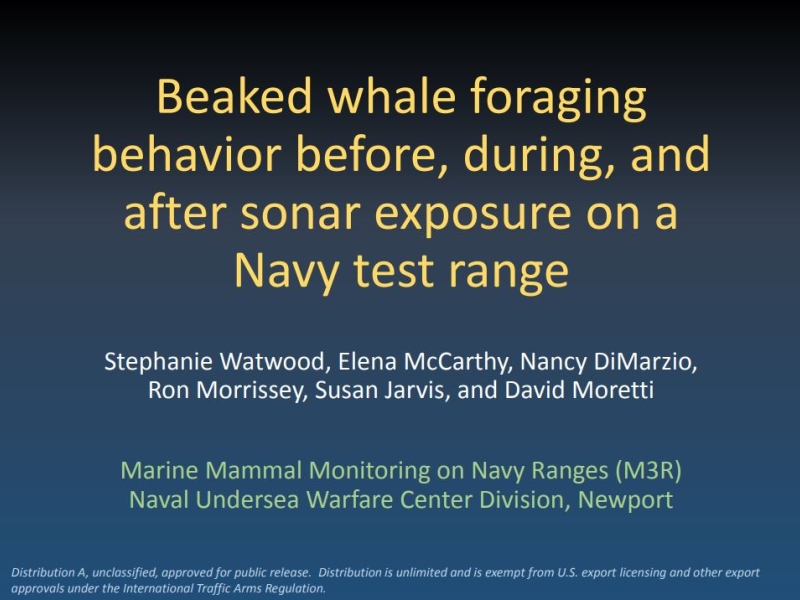
During FY2012, with funding provided by the Chief of Naval Operations (CNO) N45 Energy and Environmental Readiness Division, the Marine Mammal Monitoring on Navy Ranges (M3R) program carried out several acoustic monitoring efforts to determine the spatial and temporal distribution of cetacean species on the Southern California Anti-Submarine Warfare (ASW) Range (SOAR) , to document the reaction of these species to sonar with a focus on beaked whales, and to provide a means of longterm passive acoustic monitoring. Specifically, M3R participated in a number of marine mammal species visual verification and tagging tests, ONR-sponsored glider tests, the SOCAL 2011-12 Behavioral Response Study (BRS), and for the first time conducted low-frequency acoustic monitoring of baleen whales.
- 2,344.53 KB
More details
Collapse details
Date Published:
Filesize:
- February 1, 2022
Passive acoustic monitoring was conducted in the Navy’s Southern California Range Complex from April 2020 to 2021 to detect marine mammal and anthropogenic sounds. High-frequency Acoustic Recording Packages (HARPs) recorded sounds between 10 Hz and 100 kHz at four locations: two west of San Clemente Island (1,300 m depth, site E and 1,100 m depth, site H) and two southwest of San Clemente Island (1,300 m depth, site N and 1,200 m depth, site U). With the offshore expansion of the SOCAL range, future noise monitoring will be improved by the deployment of a recorder west of San Nicolas Island (site SN). This new site will replace site U, which is located in the Mexican Exclusive Economic Zone where instrument deployment is difficult.
- 6,849.90 KB
More details
Collapse details
Date Published:
Filesize:
- December 23, 2016
To effectively protect and manage marine mammals, contemporary information on their abundance and distribution is essential. Several factors influence presentday insight including the accessibility of the study area and the degree of difficulty in locating and studying target species.
- 1,631.76 KB
More details
Collapse details
Date Published:
Filesize:
- April 1, 2009
During this project, the visual survey covered a total of 760 kilometers (410 nautical miles) on-effort while transit and fog effort legs accounted for 553 km (298 nm). There were a total of 96 sightings (453 individuals) of 11 confirmed marine mammal species; these included fin, humpback, gray, and minke whales as well as killer whales, Dall’s and harbor porpoise, Pacific white-sided dolphins and Steller sea lions, harbor seals and sea otters. Additionally, there were 36 sightings (46 individuals) of unidentified large whales, dolphins and pinnipeds. Acoustically, operations were conducted 24-hours/day surveying a total of 3,519 km (1,900 nm) and recording 49 acoustic detections of sperm whales and killer whales. Photographs of nineteen individual killer whales and four fin whales were obtained on this cruise and compared to existing catalogs.
- 1,894.30 KB
More details
Collapse details
Date Published:
Filesize:
- April 1, 2014
During this survey, the visual team surveyed 4,504 kilometers (km) of ‘full-effort,’ which included 349 km of ‘transit-effort.’ There was an additional 375 km of ‘fog-effort’ (transect and transit). Based on total effort, there were 802 sightings (1,998 individuals) of 13 confirmed marine mammal species, with an additional 162 sightings (228 individuals) of unidentified cetaceans and pinnipeds (including those recorded on transit and during off-effort mode).
- 12,416.19 KB
More details
Collapse details
Date Published:
Publication:Ocean:Region:Species:Methods:
- January 1, 2017
To effectively protect and manage marine mammals, contemporary information on their abundance and distribution is essential. Several factors influence present-day insight including the accessibility of the study area and the degree of difficulty in locating and studying target species. The offshore waters of the Gulf of Alaska are important habitat to a variety of cetaceans yet have remained largely unsurveyed due to its remote location, vast geographic area, and challenging environmental conditions. Between 2009 and 2015, three vessel surveys were conducted using line-transect sampling methods to estimate cetacean abundance and density. Here, we present results on the distribution for all species encountered and density and abundance for six species, including humpback whales (Megaptera novaeangliae), fin whales (Balaenoptera physalus), sperm whales (Physeter macrocephalus), blue whales (B. musculus), killer whales (Orcinus orca), and Dall’s porpoise (Phocoenoides dalli). Fin whales, humpback whales, and Dall’s porpoise were the most abundant species. Beaked whales were documented only in 2015. Prior to this study, recent sightings of blue whales were rare, likely related to the lack of offshore survey coverage. No North Pacific right whales (Eubalaena japonica) were sighted, underscoring the critically endangered status of this species in a formerly populous habitat. Although these results provide the first estimates from offshore waters, additional effort is necessary to assess trends and to obtain baseline data for the rare and cryptic species in order to better inform conservation and management actions.
More details
Collapse details
Date Published:
Filesize:
- January 15, 2025
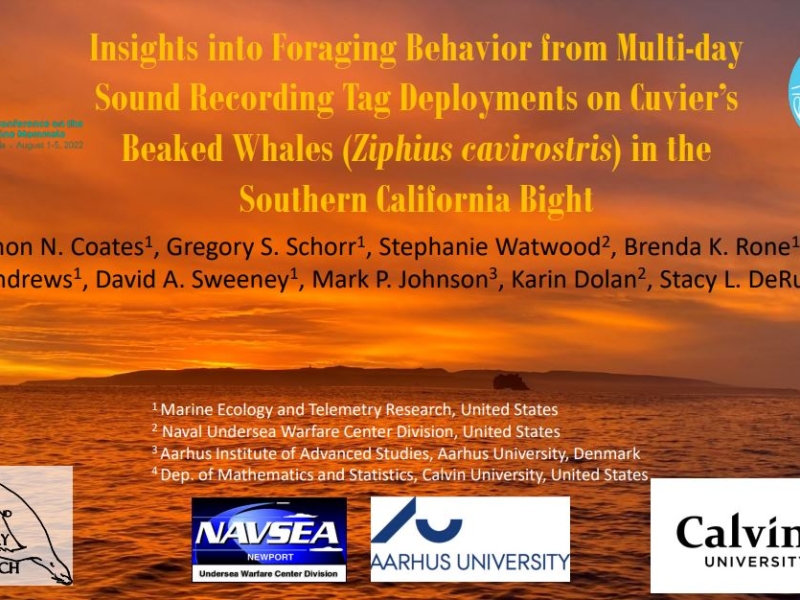
This document represents a brief annual summary on work completed between January 1st, 2024 to December 15th, 2024, under award N66604-22-D-F200, which is part of a broad project to monitor the populations of goose-beaked whales (Ziphius cavirostris) and fin whales (Balaenoptera physalus) in the Southern California Testing and Training Range (SCTTR).
- 2,847.52 KB
More details
Collapse details
Date Published:
Filesize:
- December 31, 2022
The Southern California (SOCAL) portion of the Hawaii-Southern California Training and Testing (HSTT) area (SOCAL TR) is one of the United States Navy’s most active training areas, particularly for mid-frequency active sonar (MFAS). Much of SOCAL lies within the Southern California Bight, a productive oceanographic region that hosts a wide variety of marine species. As part of an ongoing study of the distribution and demographics of several marine mammal species within SOCAL, we conducted 32 days of survey effort from 6 January 2022 to 26 November 2022, specifically focusing on the Southern California Anti-submarine Warfare Range (SOAR).
- 2,783.94 KB
More details
Collapse details
Date Published:
Filesize:
- June 1, 2020
Here we present analyses of the DASBR deployments from the CCES 2018 project. We provide information on the times and locations of drift deployments and retrievals. Each drift is also illustrated on maps of the study area. We present analyses of cetacean echolocation detections 2 from DASBR recordings including those from beaked whales, sperm whales, and NBHF species. As in the previous 2016 study, beaked whale detections were dominated by Cuvier’s beaked whale. All the beaked whale species detected in 2016 were also detected in this 2018 study, plus the addition of a signal, designated BWC that had been previously detected in the central and western Pacific, but not previously in the eastern Pacific. Sperm whales and NBHF species were detected throughout the study area.
- 5,022.87 KB
More details
Collapse details
Date Published:
Filesize:
- June 1, 2017
From 2013 to 2016, we conducted systematic line-transect aerial surveys in 8 sub-regions of Puget Sound encompassing inland waters of Washington State. U.S.-funded surveys were conducted year-round and focused on estimating seasonal in-water density and abundance of marine mammals, particularly harbor porpoises and harbor seals
- 4,652.56 KB
More details
Collapse details
Date Published:
Filesize:
- December 31, 2015
From 2013 to 2015, researchers conducted systematic line-transect aerial surveys for marine mammals in eight subregions of Puget Sound encompassing inland waters of Washington State. Effort consisted of five separate survey periods spanning four seasons (winter, spring, summer and fall) and was funded by the United States Navy (Navy). Surveys focused on estimating seasonal in-water density and abundance of cetaceans, particularly harbor porpoise (Phocoena phocoena).
- 5,860.87 KB
More details
Collapse details
Date Published:
Filesize:
- August 1, 2012
This report summarizes three aerial surveys conducted between 31 August 2011 and 31 July 2012 on the Navy’s Southern California Range Complex (SOCAL), and includes results from the first year of deploying sonobuoys from the aircraft to simultaneously monitor both acoustic and visually observed behaviors.
- 13,207.28 KB
More details
Collapse details
Date Published:
Filesize:
- August 6, 2025
The Alaska Fisheries Science Center (AFSC), NOAA Fisheries, with support from the U.S. Navy, conducted line transect surveys in Behm Canal and adjacent areas in the spring of 2023 and fall of 2024 to obtain estimates of density and abundance of cetaceans and information on marine mammal distribution and occurrence.
- 9,210.00 KB
Complete
Accelerometry Tag Development
Project Objectives
Increase capacity and develop training for marine mammal monitoring in Hawaii utilizing non-invasive triaxial accelerometry biologging tags to quantify fine-scale behavioral and energetic responses of protected species to potential anthropogenic disturbance
Current
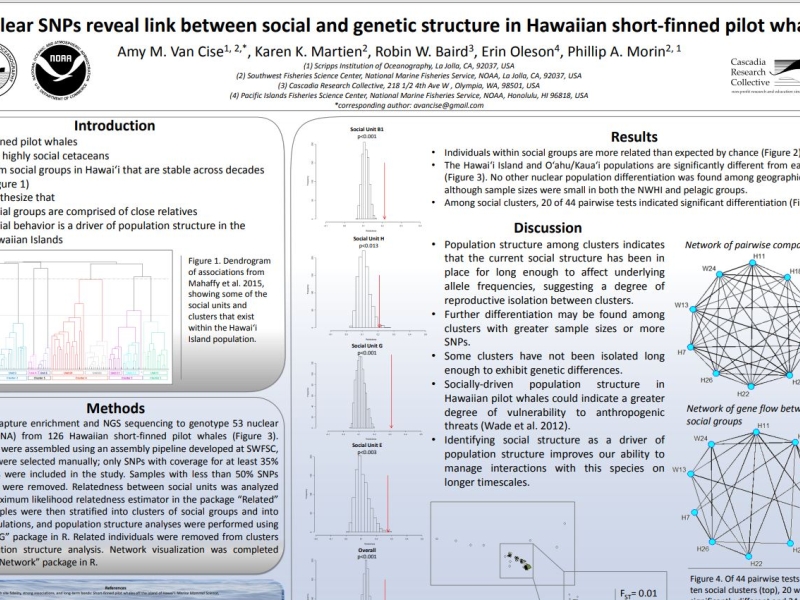
Behavioral Response Analysis of Two Populations of Short-Finned Pilot Whales to Mid-Frequency Active Sonar
Project Objectives
Utilize newly developed statistical methods from the Atlantic BRS project and apply them to all the satellite-tagged pilot whales from both the Atlantic and Pacific studies.
Complete
Blue and Fin Whale Satellite Tagging
Project Objectives
Determine the movement patterns, occurrence, and residence times of blue whales and fin whales within U.S. Navy training and testing areas as well as Biologically Important Areas along the U.S. West Coast
Complete
Conservation Canine for Marine Mammal Scat Collection in Hawaii
Project Objectives
Test whether a K9 can be trained to detect and 'direct' boat drivers via changes in behavior to the scat of marine mammals in Hawaii
Complete
Effectiveness of Navy Lookout Teams in Detecting Cetaceans
Project Objectives
Obtain data to characterize the potential exposure of marine mammals and ESA-listed marine species to Navy training and testing activities, evaluate the effectiveness of mitigation measures
Current
Estimation of Received Levels of MFAS and Behavioral Response of Marine Mammals at PMRF
Project Objectives
Further our understanding of the Monitoring Questions: 1) What is the occurrence and estimated received levels of MFAS on 'blackfish', humpback, minke, sperm and Blainville's beaked whales within the PMRF instrumented range? and 2) What, if any, are the short term behavioral responses of 'blackfish,' humpback, minke, sperm and Blainville's beaked whales when exposed to MFAS/explosions at different levels/conditions at PMRF?
Current
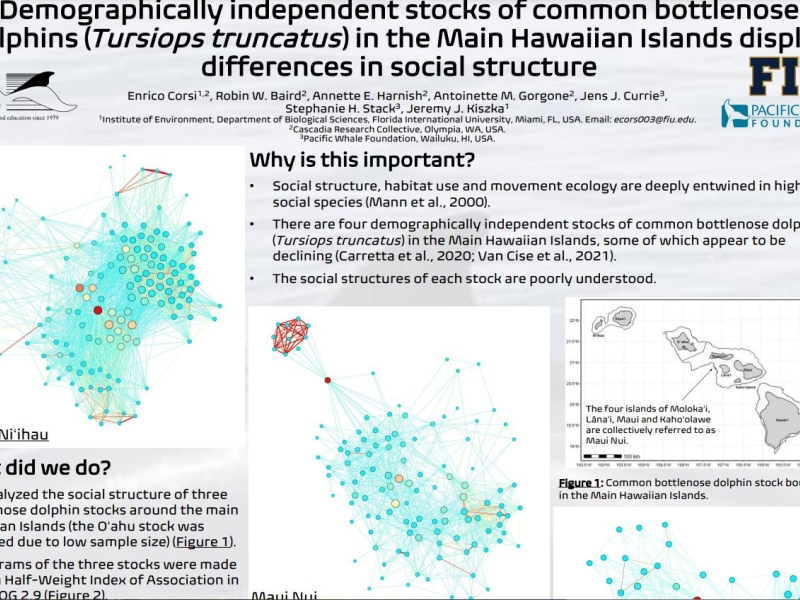
Goose-Beaked Whale and Fin Whale Population Dynamics and Impact Assessment at the Southern California Offshore Antisubmarine Warfare Range (SOAR)
Project Objectives
Improve knowledge of baseline population demographics, vital rates, and movement patterns of Cuvier’s beaked whales and fin whales. Examine what, if any, short term behavioral and/or vocal responses occur when exposed to sonar or explosions at different levels and conditions. Determine if exposure to sonar or explosives impact the long term fitness and survival of individuals or the population, species, or stock
Complete
Guadalupe Fur Seal Satellite Tracking
Project Objectives
Determine the at-sea distribution of endangered Guadalupe fur seals and whether they travel through or utilize the offshore waters of the Southern California Range Complex and Northwest Training and Testing area
Complete
Hawaiian Monk Seal Tagging
Project Objectives
Investigate potential impacts of naval activities on Hawaiian monk seals
Current
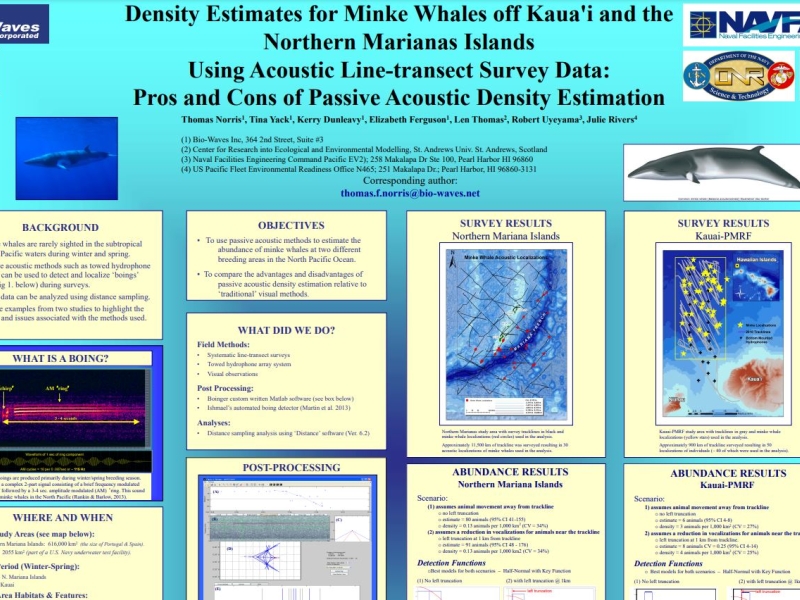
Long Term Acoustic Monitoring of Marine Mammals Utilizing the Instrumented Range at Pacific Missile Range Facility (PMRF)
Project Objectives
Improve understanding of the long term trends in occurrence of marine mammals (e.g., minke, humpback, fin, Bryde's, Blainville's) on the PMRF range. Examine what, if any, acoustic and physical behavioral responses occur to Navy activities.
Current
Marine Mammal Monitoring on Navy Ranges (M3R)
Project Objectives
Improve understanding of the long term trends in occurrence of marine mammals on the PMRF and SOAR ranges.
Current
Marine Mammal Sightings During CalCOFI Cruises
Project Objectives
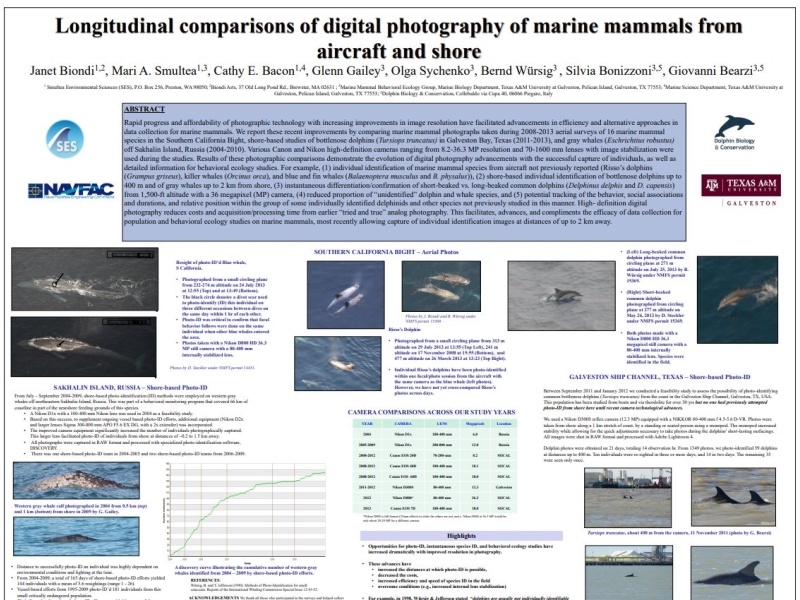
Determine what species and populations of marine mammals are present in Southern California and estimate the abundance and density across seasons
Complete
North Pacific Humpback Whale Tagging
Project Objectives
Determine the occurrence, movement patterns, and residency patterns of multiple humpback whale Distinct Population Segments within Pacific Ocean Navy Range Complexes
Current
North Pacific Marine Mammal Species Distribution
Project Objectives
Develop a North Pacific-wide species distribution model for cetaceans
Current
Pacific Islands Comprehensive Stranding Investigations
Project Objectives
Conduct comprehensive investigations of stranded marine mammals throughout the Pacific Islands with emphasis on the Hawaiian and Mariana Island chains. This includes conducting necropsies of stranded animals, collecting and archiving samples, conducting disease screening, genetic testing, and analysis of historical data. The objective is to examine stranding patterns and causes of death for marine mammals in the Pacific Islands.
Complete
Pacific Islands Marine Mammal Stranding Diseases
Project Objectives
Determine cause of death when cetaceans strand to ensure accurate public understanding of stranding cause, with focus on infectious diseases
Current
Pacific Marine Assessment Program for Protected Species (PACMAPPS) survey
Project Objectives
Identify species of beaked whales, odontocetes, and baleen whales that occur in the surveyed areas; Monitor marine mammal and sea turtle presence, distribution, and diversity in offshore waters; Develop a better understanding of marine mammal distribution, movement patterns, habitat use, population structure, and abundance; Develop reference library of visually-validated acoustic recordings of marine mammals.
Complete
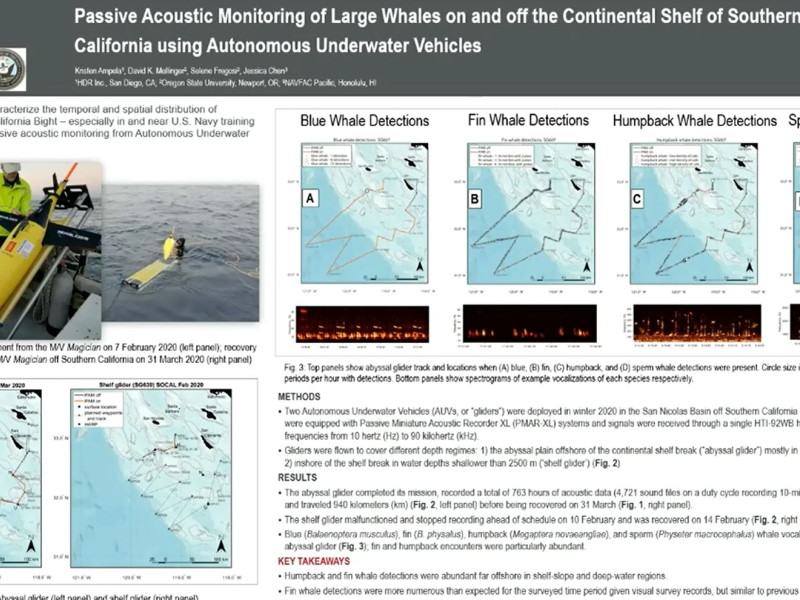
Passive Acoustic Monitoring of Marine Mammals Using Autonomous Underwater Vehicles in Southern California
Project Objectives
Explore presence of marine mammals in less-surveyed, offshore areas
Current
Pilot Project to Assess Feasibility of Multi-Sensor Tagging of Rough-Toothed Dolphins at the Pacific Missile Range Facility (PMRF)
Project Objectives
Determine feasibility and efficacy of deploying high resolution multi-sensor tags on rough-toothed dolphins at PMRF and determine how collected data can be used to move toward a better understanding of the effects of Navy activities, ultimately leading to PCoD modelling.
Current
Southern California Beaked Whale Occurrence (formerly "Passive Acoustic Monitoring of Marine Mammals in Southern California Range Complex (SOCAL)")
Project Objectives
Determine the distribution and temporal patterns of beaked whale occurrence in the waters within and outside the Southern California Range Complex (SOCAL). Use passive acoustic monitoring to determine what species are present in SOCAL and examine spatial and temporal patterns.
Current
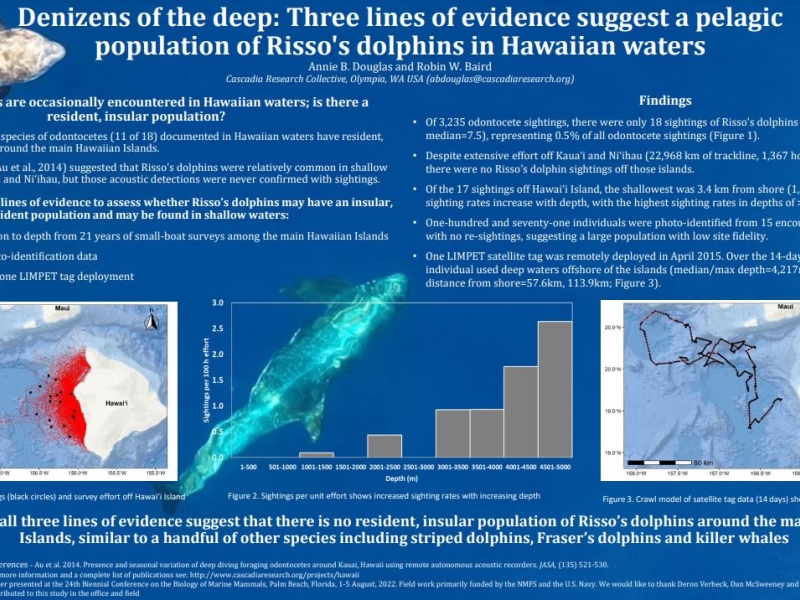
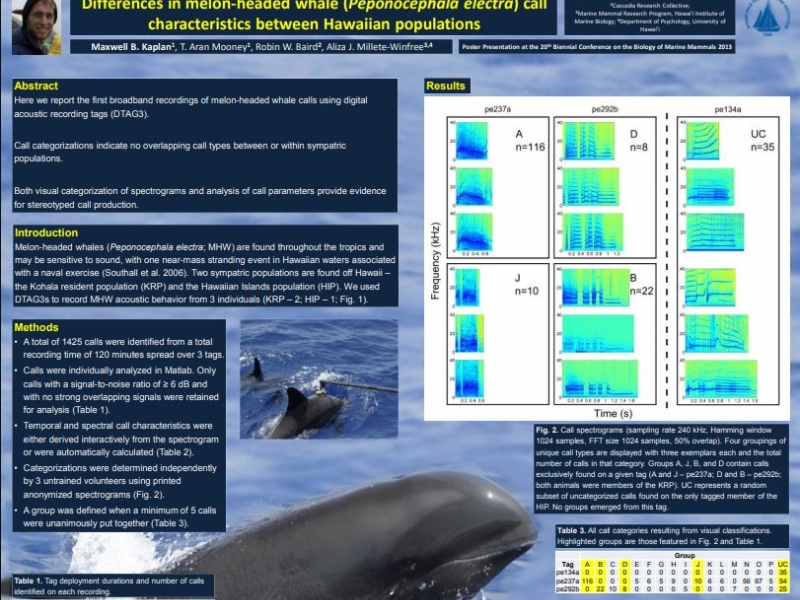
Visual Survey and Tagging of Hawaiian Odontocetes
Project Objectives
(1) define the spatial movement and habitat use patterns of species that are exposed to mid-frequency active (MFA) sonar (2) determine how these patterns influence exposure and potential responses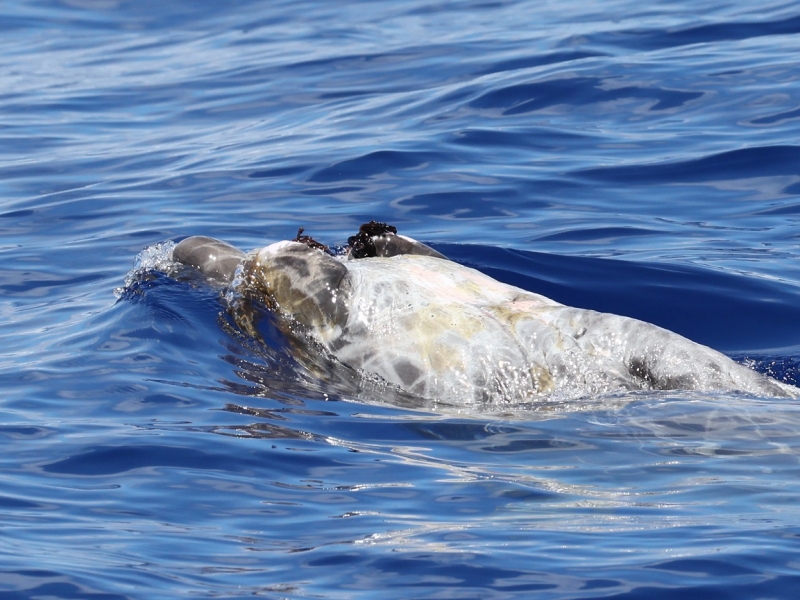
Kaua‘i field project - August 2026
August 25, 2026
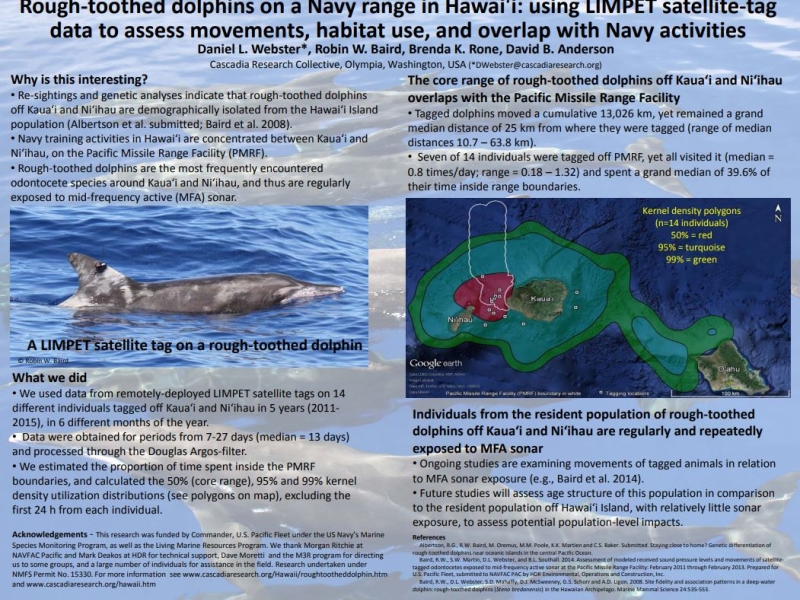
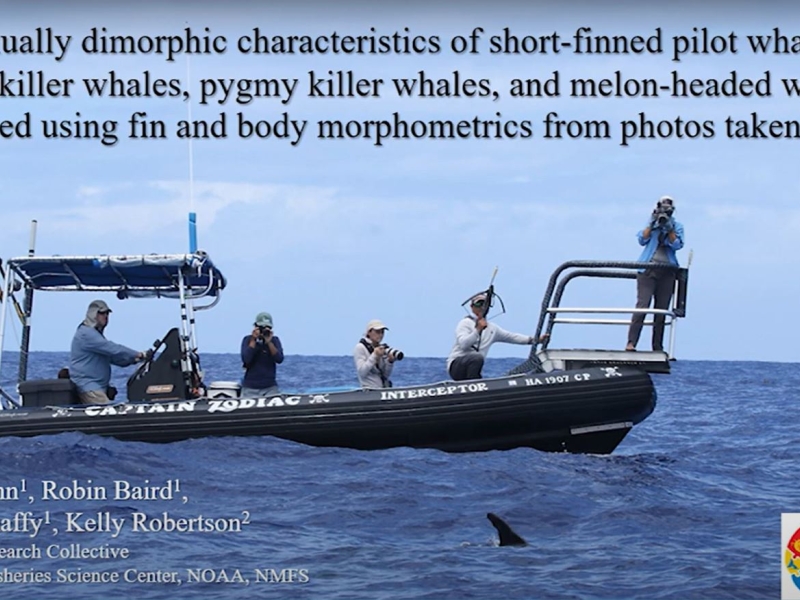
Researchers from Cascadia Research Collective are conducting a 9-day field session off Kaua'i to deploy LIMPET satellite tags on odontocete cetaceans prior to a Submarine Command Course (SCC) to be able to examine their behavior before, during, and after the training event. Click on the image below to see daily updates from the field.
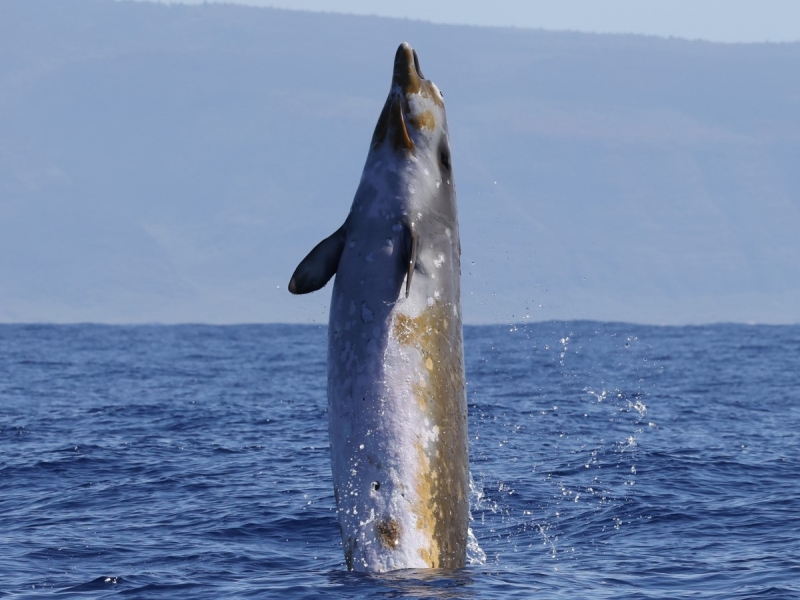
Kaua'i Field Work Updates
February 20, 2025
Scientists from Cascadia Research Collective recently completed a ~9-day field project off Kaua’i that started on February 9th. This project is timed to occur prior to a Submarine Command Course (SCC) training event. The primary goal is to deploy satellite telemetry tags on multiple species of odontocete cetaceans prior to the SCC, to be able to examine their behavior before, during, and after the event. This approach has been very successful in the past as a way of examining how different species respond to Navy training activities including mid-frequency active sonar (MFAS). Click through the picture below to see daily updates.
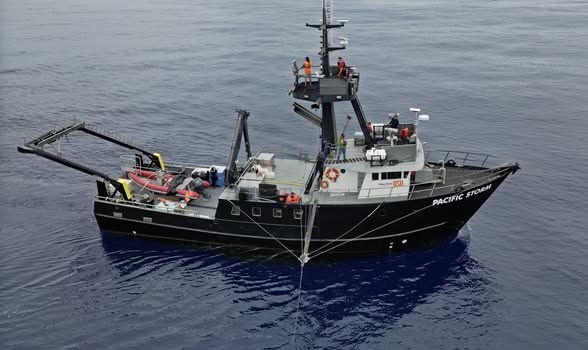
Mesoplodon mysterioso
June 13, 2024
We are thrilled to be part of the "Mystery Mesoplodon Expedition" off the west coast of Baja California searching for an elusive new species of beaked whale. Read about the initial discovery and stay tuned for updates on this exciting expedition!
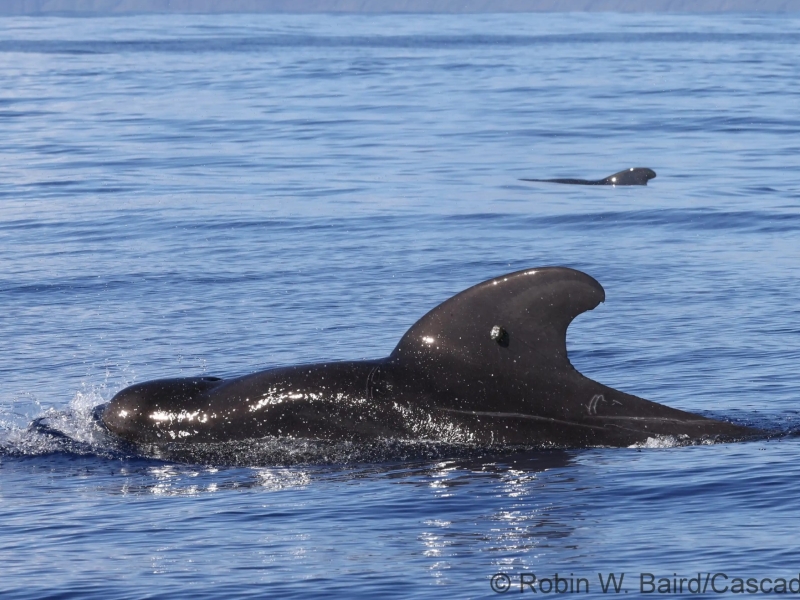
Kauai' Field Work Updates
February 16, 2024
Scientists from Cascadia Research Collective are leading a ~9-day field project off Kaua’i that started on February 11th.
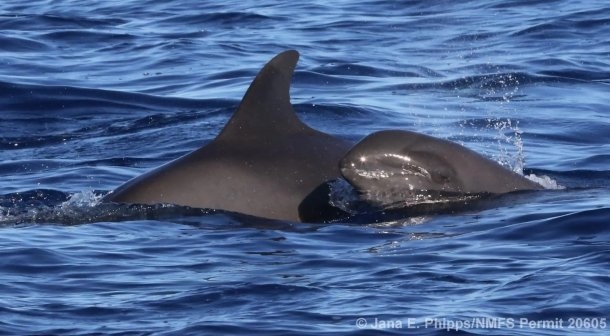
August 2022 Kaua‘i Field Project
August 18, 2022
Cascadia Research Collective began an 8-10 day field project off Kaua’i starting on August 16th. This project is timed to occur prior to a Submarine Command Course (SCC). Their primary goal is to deploy LIMPET satellite tags on one or more species of odontocete cetaceans prior to the SCC, to be able to examine their behavior before, during, and after the SCC. This approach has been very successful in the past as a way of examining how different species respond to Navy training activities including mid-frequency active sonar.
Beaked whale distribution and seasonality in Southern California